
In A Hurry? Check Out The Key Takeaways Section For This Article
Braces for Kids: A Huntersville Parent Guide
Few parenting questions arrive as quietly as this one related to the development and alignment of your child’s teeth. A child smiles, a tooth looks crowded or crooked, and a parent begins to wonder whether braces are coming and when. The good news is that childhood is the ideal window to correct most bite and alignment issues using braces for kids. This is the ideal time because a young jaw is still growing and responds well to guidance.
Below we discuss what parents should know, what to watch for, and when to ask, in order to help take most of the worry out of the process.
 When Should Kids Get Braces
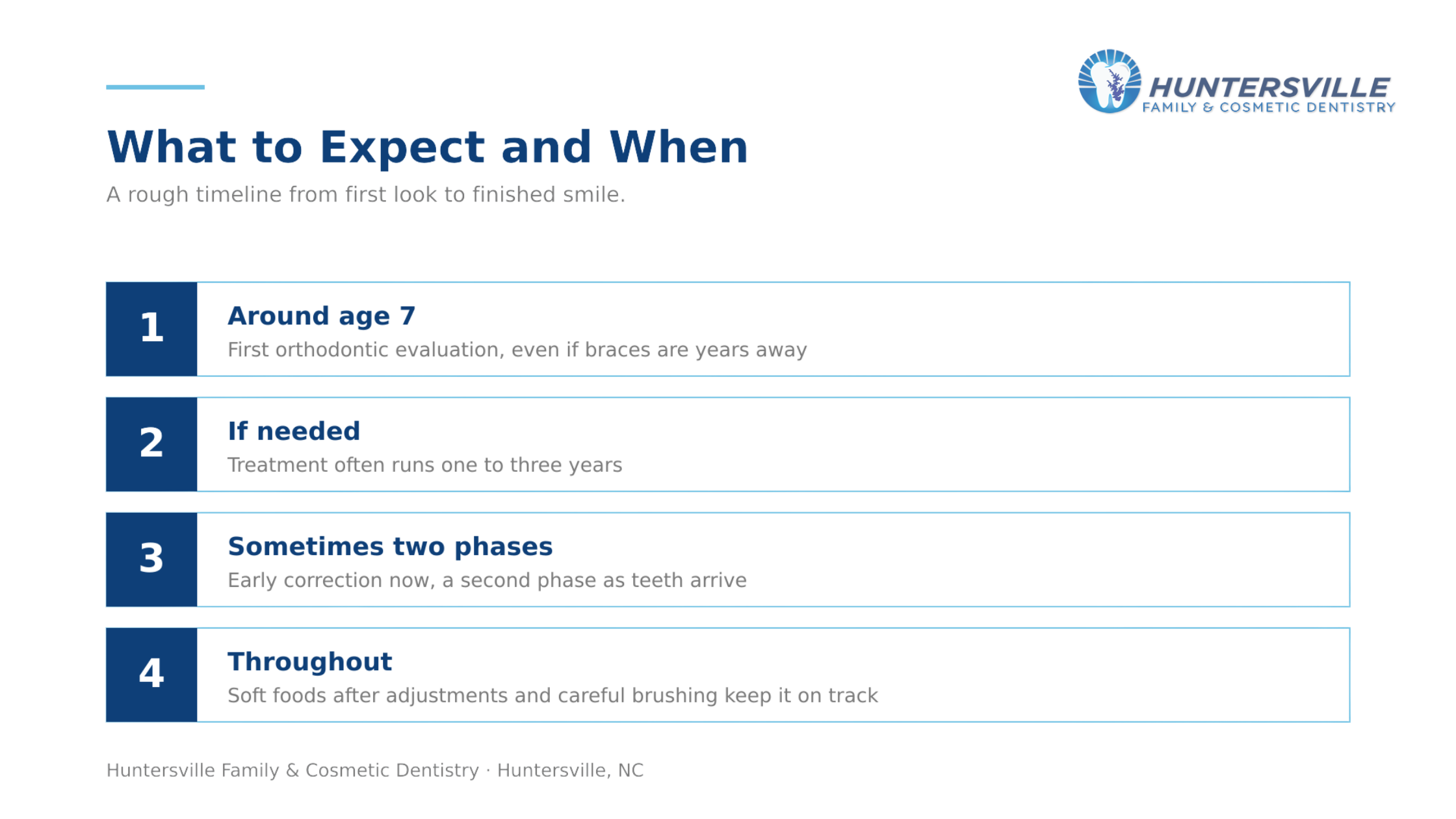
There is no single birthday that fits every child, but there is a clear checkpoint. The American Association of Orthodontists recommends a first orthodontic evaluation around age seven. By then a child has enough permanent teeth and jaw development for a dentist to spot problems early, even when treatment itself is still years away. That first look is about timing, not immediate braces. Some issues are best corrected while the jaw is growing, while others are better left until more permanent teeth arrive.
 Signs Your Child May Need Braces
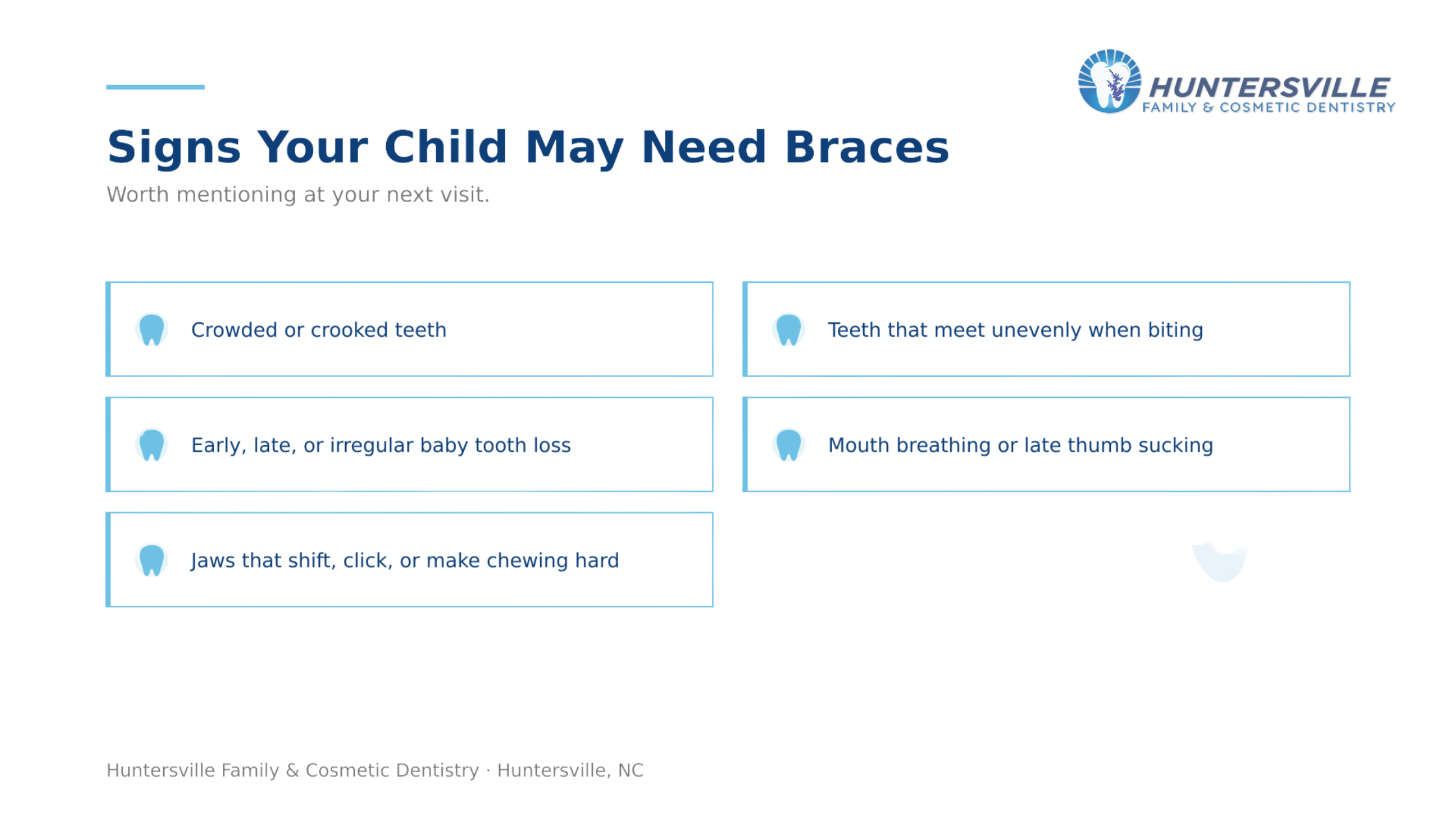
A few patterns are worth mentioning at your next visit:
- Crowded, overlapping, or visibly crooked teeth.
- Teeth that meet unevenly, or not at all, when biting down.
- Early, late, or irregular loss of baby teeth.
- A habit of mouth breathing, or thumb sucking past the toddler years.
- Jaws that shift or make sounds, or difficulty chewing.
Noticing one of these does not mean braces are inevitable. It simply means an evaluation is worthwhile, since early attention often makes later treatment shorter and simpler.
 What Types of Braces Are Available for Children
Traditional Metal Braces
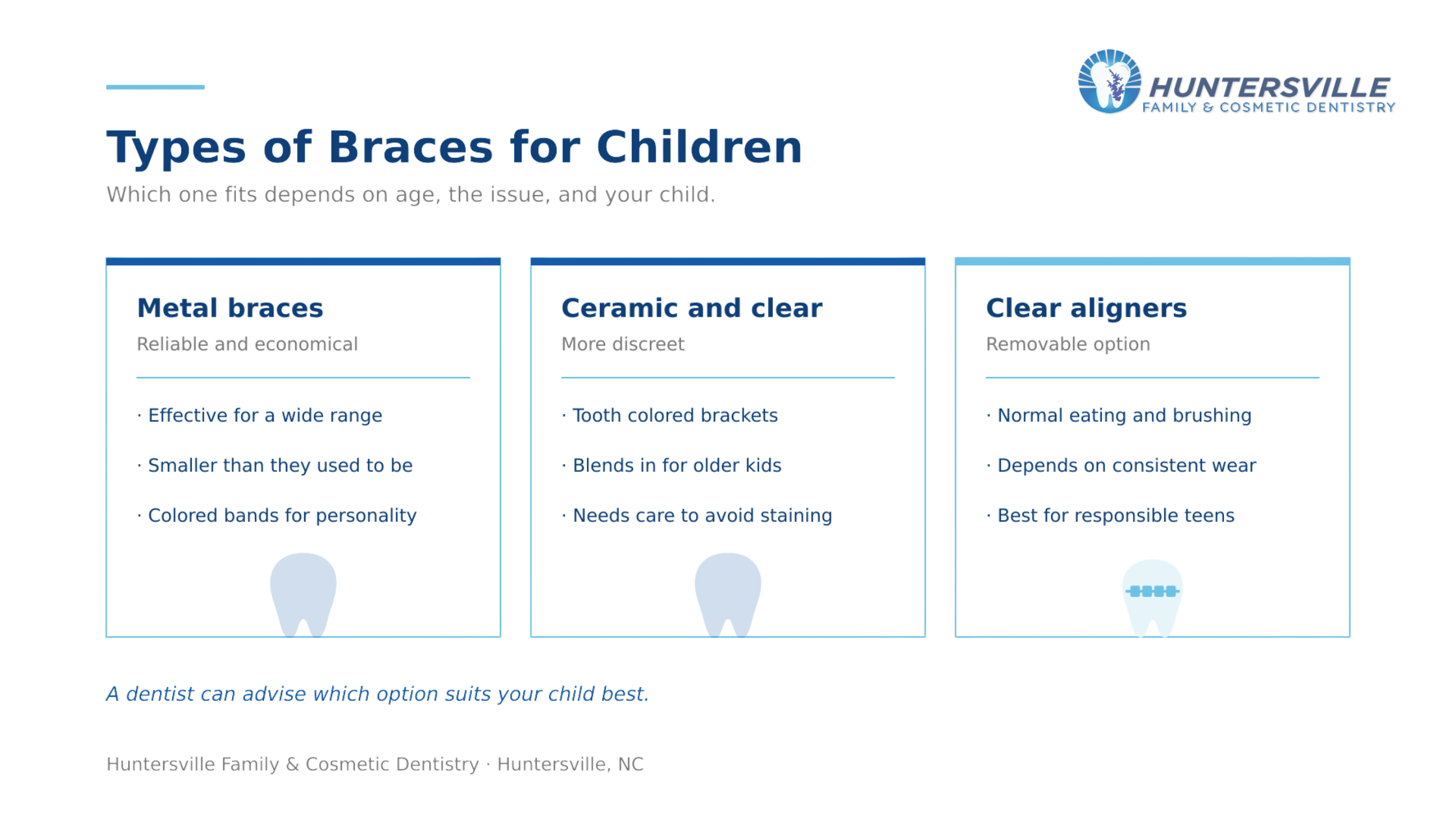
Still the most common choice for children, metal braces are reliable, effective for a wide range of issues, and often the most economical. Modern versions are smaller and more comfortable than the braces many parents remember, and colored bands let a child add a little personality.
Ceramic and Clear Options
For older children and teens who feel self conscious, tooth colored ceramic brackets blend in more discreetly while working the same way as metal. They call for a little extra care to avoid staining, which is worth discussing based on a child readiness.
Clear Aligners
For certain teens, removable clear aligners are an option, allowing normal eating and easier brushing. They depend heavily on consistent wear, so they suit a responsible child who will keep them in as directed. A dentist can advise whether a case is suited to aligners or better served by braces. Broader guidance on children oral health is available from the American Dental Association.
How Long Do Braces Take for Kids
Most children wear braces somewhere between one and three years, depending on how much correction is needed and how the jaw responds. Early interventional treatment may be shorter and focused on a single problem, sometimes followed by a second phase later. Consistent care matters more than any calendar, since keeping appointments and following instructions keeps treatment on schedule. The Mayo Clinic notes that good oral hygiene throughout treatment protects the teeth being straightened.
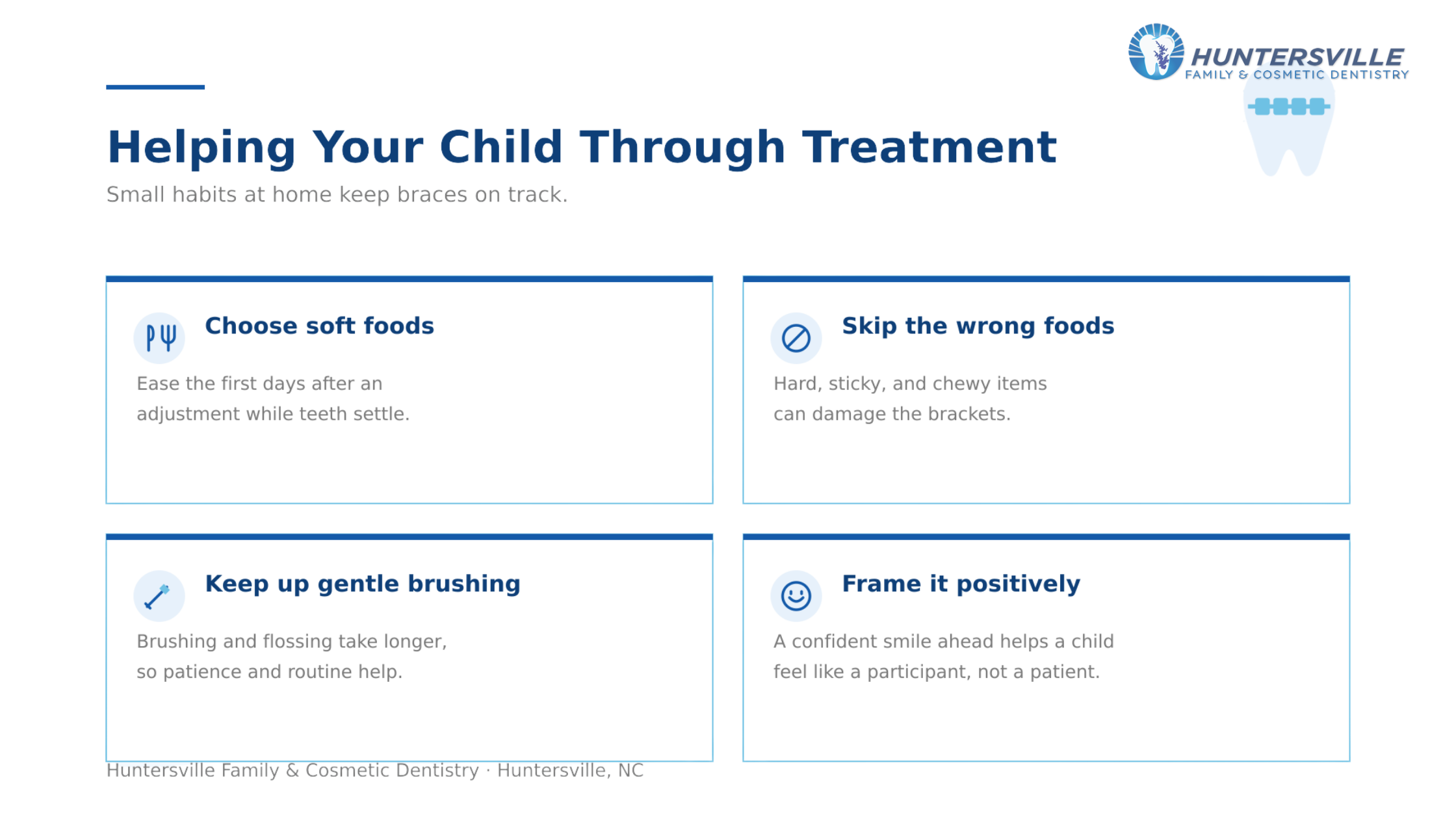 Helping Your Child Through Treatment
Parents make a real difference in how smoothly braces go. Soft foods ease the first days after an adjustment, and steering clear of hard, sticky, or chewy items protects the brackets. Brushing and flossing take a little longer with braces, so a gentle routine and patience help. Most importantly, framing braces as a positive step toward a healthy, confident smile helps a child feel like a participant rather than a patient.
Braces for Kids in Huntersville NC
Every child’s mouth develops differently, and the right time and approach can only be judged in person. Huntersville Family and Cosmetic Dentistry provides family and childrens dental care for patients of every age. Parents wondering whether it is time for a first orthodontic look can request an appointment to discuss options with our practitioners.
Key Takeaways From This Article
When should kids get braces?
The American Association of Orthodontists recommends a first orthodontic evaluation around age seven. By then a child has enough permanent teeth and jaw development for a dentist to spot problems early, even if treatment itself is still years away. That first visit is about timing, not immediate braces.
What are the signs my child may need braces?
Watch for crowded, overlapping, or crooked teeth; teeth that meet unevenly or not at all when biting down; early, late, or irregular loss of baby teeth; mouth breathing or thumb sucking past the toddler years; and jaws that shift, make sounds, or cause difficulty chewing. Noticing one of these does not mean braces are inevitable, but it makes an evaluation worthwhile.
What types of braces are available for children?
There are three main options. Traditional metal braces are reliable, effective for a wide range of issues, and usually the most economical. Ceramic or clear brackets blend in more discreetly and suit older children and teens. Removable clear aligners allow normal eating and easier brushing but depend on consistent wear, so they suit a responsible child. A dentist can advise which option fits a given case.
How long do braces take for kids?
Most children wear braces between one and three years, depending on how much correction is needed and how the jaw responds. Early treatment may be shorter and focused on a single problem, sometimes followed by a second phase later. Keeping appointments and following instructions keeps treatment on schedule.
How can I help my child through braces treatment?
Offer soft foods in the first days after an adjustment, and avoid hard, sticky, or chewy items that can damage brackets. Brushing and flossing take a little longer with braces, so build in a gentle routine and some patience. Framing braces as a positive step toward a healthy, confident smile helps a child feel like a participant rather than a patient.
Request An Appointment Today
Search Our Site
Meet Our Family & Cosmetic Dentists in Huntersville, NC
If you are looking for a dentist in Huntersville, NC, you have come to the right place. We are ready to help you get started on the path to improving your family’s oral health. Our combined experience and gentle care provide each member of your family the attention they deserve.
Do You Need An Appointment?
Recent Posts
Braces for Kids: A Huntersville Parent Guide
Braces for Kids: A Huntersville Parent Guide Few parenting questions arrive [...]

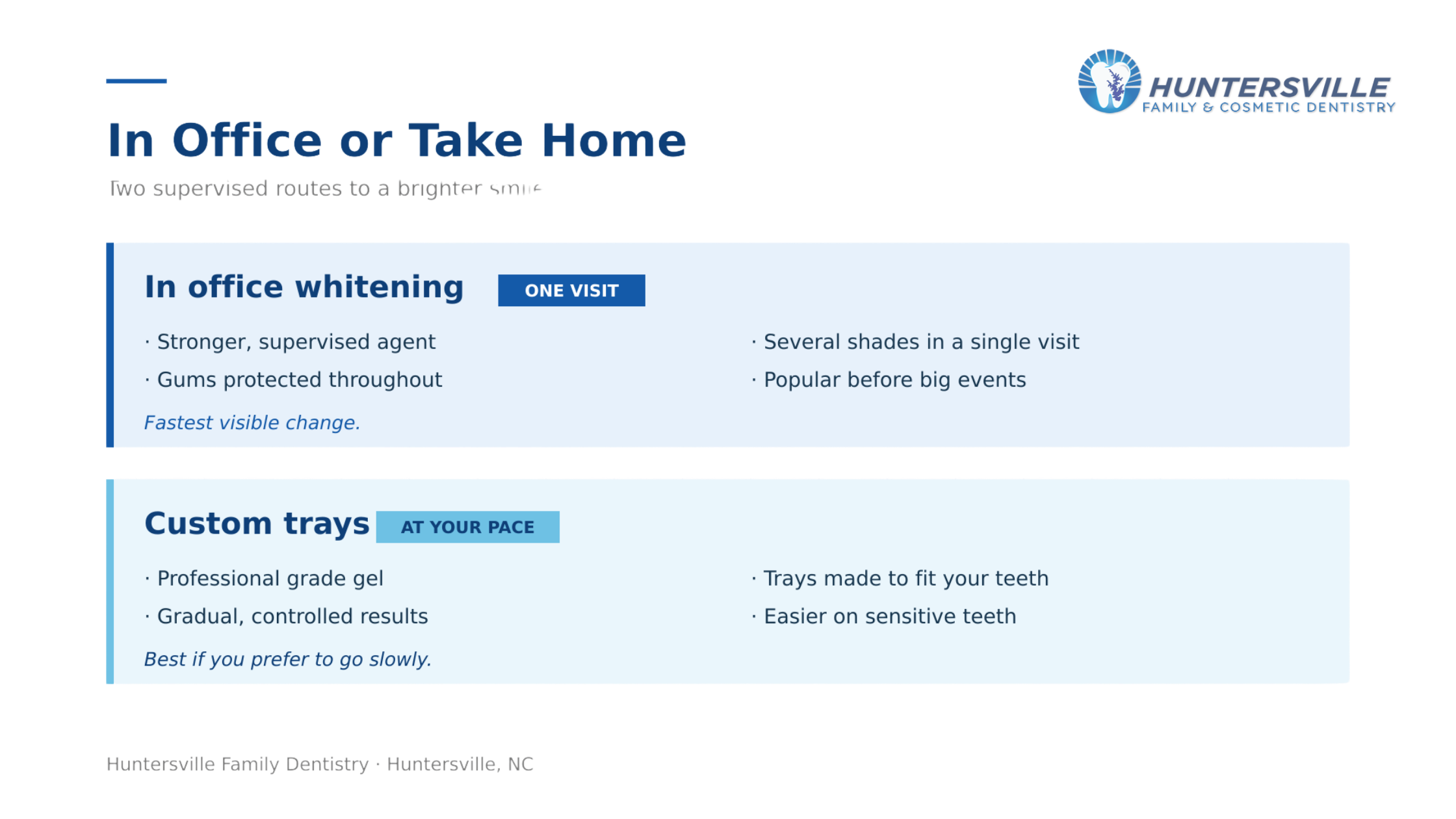
Can Yellow Teeth Become White Again?
Can Yellow Teeth Become White Again When a smile takes on [...]
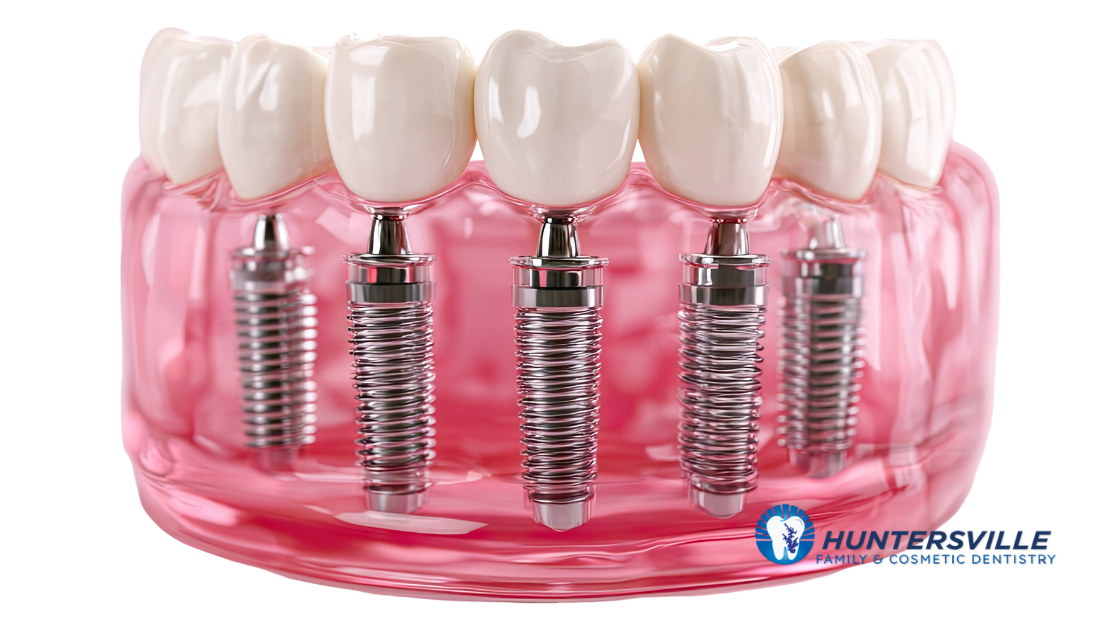
Dental Implants in Huntersville, NC: What to Expect
Dental Implants in Huntersville, NC: What to Expect and Why They Last Losing [...]
Denture Sore Spots and Relief
Denture Sore Spots and Relief Denture pain may begin as a minor irritation [...]
